The Cocktail Party Effect and Selective Attention: What is Your Brain Doing?
The cocktail party effect demonstrates the brain's selective attention ability when hearing your name in a noisy crowd. Learn how the brain processes this information.
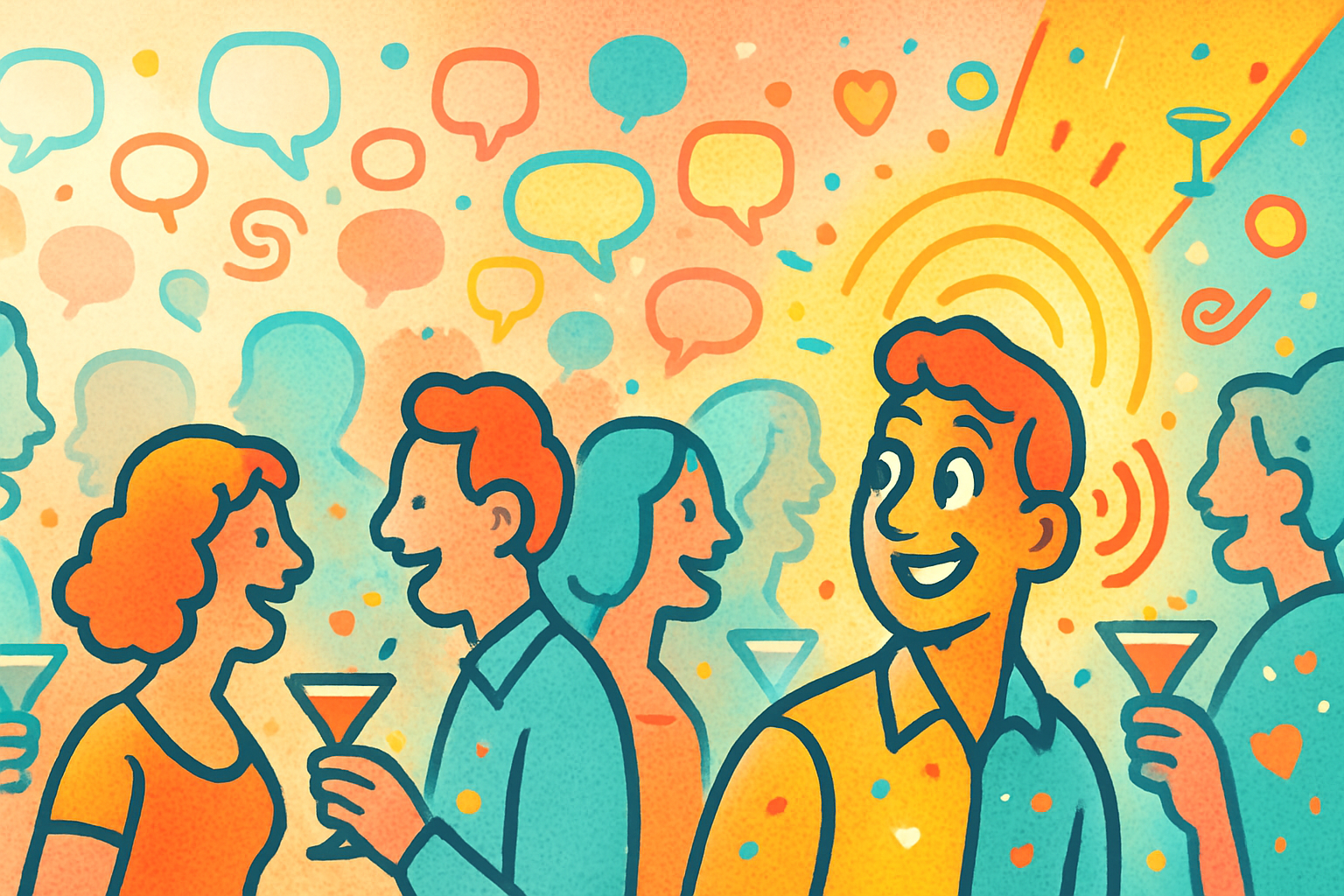
Have you ever been in the midst of a bustling bar, with music thumping and numerous conversations happening simultaneously, only to hear your name mentioned from a nearby table? This phenomenon is not merely a coincidence; it is an instance of what cognitive psychology refers to as the "cocktail party effect."
What is the Cocktail Party Effect?
The "cocktail party effect" describes the human ability to focus auditory attention on a particular stimulus while filtering out a range of other stimuli. This term was coined by researcher Colin Cherry in 1953 to explain how we can concentrate on a single conversation at a crowded party, even with many surrounding voices.
The Mechanism of Selective Attention
The brain does not simply mute all background noises as we might believe. Instead, it acts as a sophisticated filter, continuously scanning the auditory environment to identify significant information. Research has demonstrated that activity in the auditory cortex can be modulated to enhance the processing of personally relevant auditory stimuli, such as hearing one's name.[1]
Factors Influencing Selective Attention
When it comes to selective attention, it is not only your name that can catch your attention in a crowd. Studies have shown that our attention can also be influenced by personal factors such as current needs, interests, and emotions. For instance, if you are concerned about finances, the word "salary" might stand out in a noisy environment.[2]
When to Seek Professional Help?
If you find yourself struggling with concentration or experiencing issues with your attention span, consulting a psychological professional might be beneficial. Experts can help identify causes and suggest effective improvement strategies.
The cocktail party effect vividly illustrates the brain's remarkable ability to filter information amidst chaos. This not only reflects a natural human capability but also opens up further research potential into the brain's information processing mechanisms.
Frequently asked questions
What is the cocktail party effect?
The cocktail party effect describes the human ability to focus auditory attention on a specific stimulus amidst a noisy environment, such as hearing one's name at a crowded party.
How does selective attention work?
Selective attention works by the brain scanning surrounding sounds and identifying significant information, such as your name, for enhanced processing.
References
- Marty G. Woldorff, Christopher C. Gallen, S A Hampson, Steven A. Hillyard (1993). Modulation of early sensory processing in human auditory cortex during auditory selective attention.. Proceedings of the National Academy of Sciences. https://doi.org/10.1073/pnas.90.18.8722
- Kimmo Alho, David L. Woods, Alain P. Algazi, Risto Näätänen (1992). Intermodal selective attention. II. Effects of attentional load on processing of auditory and visual stimuli in central space. Electroencephalography and Clinical Neurophysiology. https://doi.org/10.1016/0013-4694(92)90005-3
This content is for public education and does not replace diagnosis or treatment by a qualified health professional.
Augustin Tran
Co-founder of The Way Home. Learn more